
Chrome Under Siege: Google Patches Eighth Zero-Day of 2026 Amid Active Exploitation
Google rushes patch for eighth actively exploited Chrome zero-day of 2026. ThreatSurface Global examines impact, mitigation, and global enterprise risks.

Google has issued an urgent security update for its Chrome browser, addressing yet another actively exploited zero-day vulnerability. This marks the eighth such critical flaw discovered and patched in 2026, signaling a persistent and aggressive threat landscape targeting the world's most popular web browser.
While specific details of the exploit remain limited to prevent further weaponization, the rapid response from Google underscores the severity of the threat. Historically, Chrome zero-days often involve critical vulnerabilities within the browser's rendering engine (Blink) or its V8 JavaScript engine, potentially leading to arbitrary code execution, sandbox escapes, and ultimately, system compromise.
The Zero-Day Imperative: Why Browser Exploits Matter
Browser zero-days are particularly potent initial access vectors. Their exploitation often requires little to no user interaction beyond visiting a malicious website, making them ideal for targeted attacks or widespread campaigns. The current zero-day (tracked as CVE-2026-XXXX, details pending Google's full disclosure) likely represents a significant risk, allowing attackers to bypass existing security measures and establish a foothold within victim environments. Such vulnerabilities can be chained with other exploits to escalate privileges or move laterally across networks.
For enterprises, an unpatched browser becomes a critical weak point. Attackers leveraging these flaws can gain access to sensitive corporate data, deploy ransomware, or establish persistent backdoors. The sheer volume of actively exploited Chrome vulnerabilities this year suggests that sophisticated threat actors, including nation-states and well-resourced cybercrime groups, are actively investing in researching and developing exploits for browser-based weaknesses.
Mitigating Browser-Based Threats
Given the relentless pace of Chrome zero-days, proactive defense is paramount. Organizations must enforce stringent patching policies, ensuring all endpoint browsers are updated immediately upon release of security fixes. Automated patch management systems are crucial for minimizing exposure windows. Furthermore, enterprises should:
- Layered Security: Implement robust endpoint detection and response (EDR) solutions capable of detecting post-exploitation activity.
- Network Segmentation: Isolate critical systems to limit lateral movement potential, even if an endpoint is compromised.
- User Education: While zero-days bypass traditional user awareness, continuous training on phishing and suspicious links remains vital as social engineering often precedes browser exploitation.
- Least Privilege: Enforce the principle of least privilege for all users and applications.
- Browser Isolation: Consider enterprise-grade browser isolation technologies to contain potential exploits within a secure, remote environment.
The Global Angle
For the global cybersecurity community, the repeated exploitation of Chrome zero-days presents a profound challenge. Chrome's ubiquitous presence across corporate networks worldwide means that any actively exploited flaw has immediate and far-reaching implications. Nation-state actors often favor browser-based exploits for intelligence gathering and industrial espionage, targeting specific individuals or organizations across borders. Supply chain integrity is also at risk, as a compromised browser could be used to access critical vendor portals or SaaS platforms, leading to a ripple effect of breaches throughout interconnected ecosystems. The eighth zero-day of 2026 is not merely a technical footnote; it is a stark reminder of the persistent and globalized nature of advanced persistent threats.
Organizations operating on a global scale must treat browser security as a top-tier priority, recognizing that geographical boundaries offer no protection against these pervasive digital threats.
Source: Google News · zero-day

Critical MSP Platform Offline: 33 Zero-Days Unleashed, Sounding Global Supply Chain Alarm
N-able's platform shutdown after 33 zero-day disclosures sends shockwaves through global MSP networks. ThreatSurface Global details implications & defensive…

Critical RMM Zero-Day Forces N-able Offline, Heightens Global Supply Chain Alarm
A critical zero-day vulnerability has forced N-able to take its N-central RMM platform offline. ThreatSurface Global examines the supply chain implications for

N-able Cloud Platform Plunges Offline Amid Mass Vulnerability Disclosure
N-able takes its cloud platform offline following the public disclosure of more than 30 critical vulnerabilities, raising significant supply chain concerns for

Automated Attack Compromises 1.5 Million Revolve Customer Payment Details
Online retailer Revolve confirms 1.5 million customer payment details compromised in a September breach. ThreatSurface Global investigates the automated attack

QNAP NAS Devices Under Siege: Plex2Shell Exploitation Surges, Urgent Action Required
QNAP NAS devices running Plex Media Server are targeted by widespread Plex2Shell exploits. ThreatSurface Global details the critical RCE vulnerability and…

Critical cPanel Zero-Day Lurked for Weeks, Threatening Global Web Infrastructure
A critical cPanel zero-day (CVE-2026-41940) was exploited for over 25 days, leaving global web infrastructure vulnerable. ThreatSurface Global examines the…
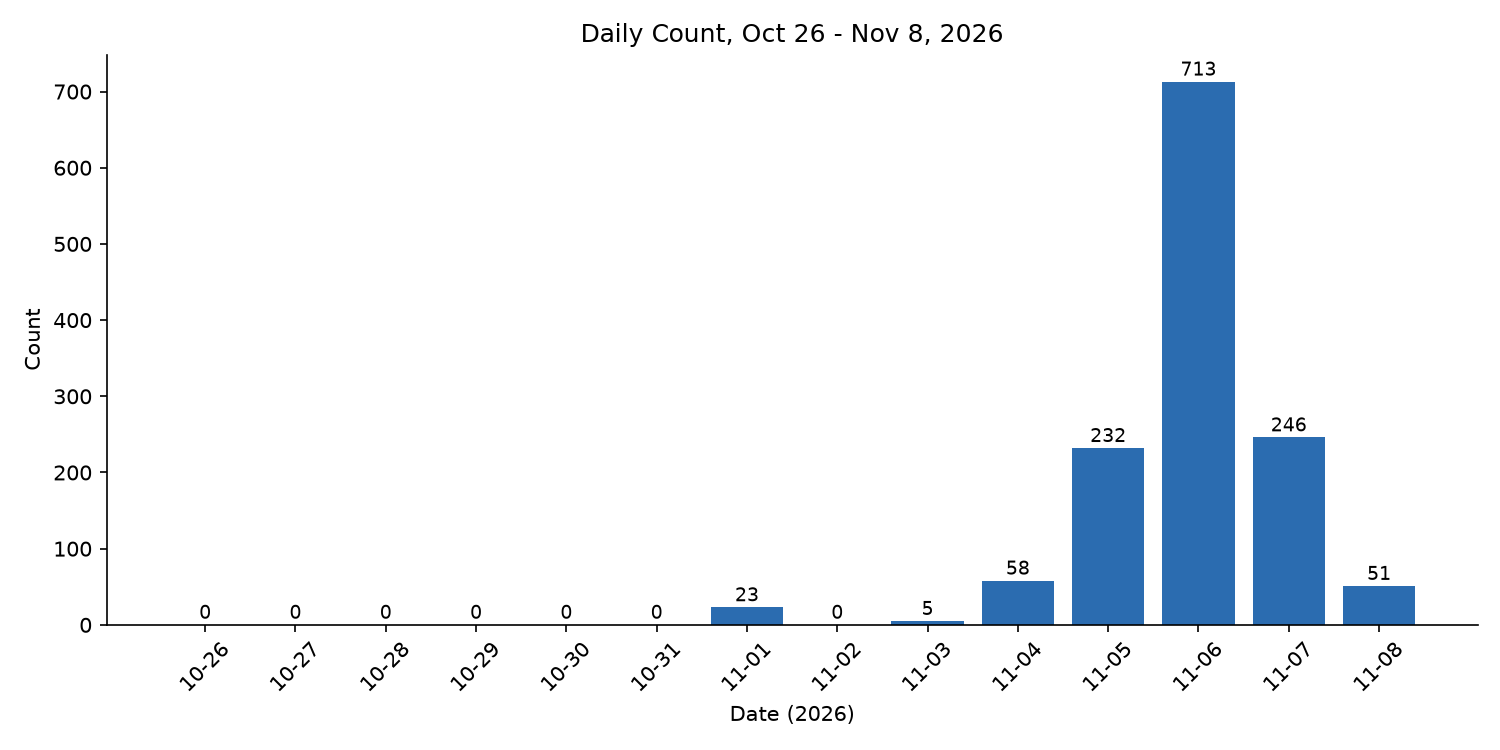
Sshole Vulnerability Triggers Global SSH Scan Surge: Exploitation Attempts Spike
New data reveals a global surge in exploitation attempts targeting CVE-2026-123158, the Sshole SSH vulnerability. Urgent patching and robust defenses…