AI-Driven Reconnaissance Amplifies Supply Chain Risk: A Global Case Study in Third-Party Vulnerability
A recent ethical hacking exercise in South Africa demonstrates how advanced AI-driven reconnaissance can autonomously map complex internal enterprise relationships, exploiting disparate data points to expose sensitive information linked to major financial institutions, bypassing direct target defenses and highlighting escalating third-party supply chain risks.
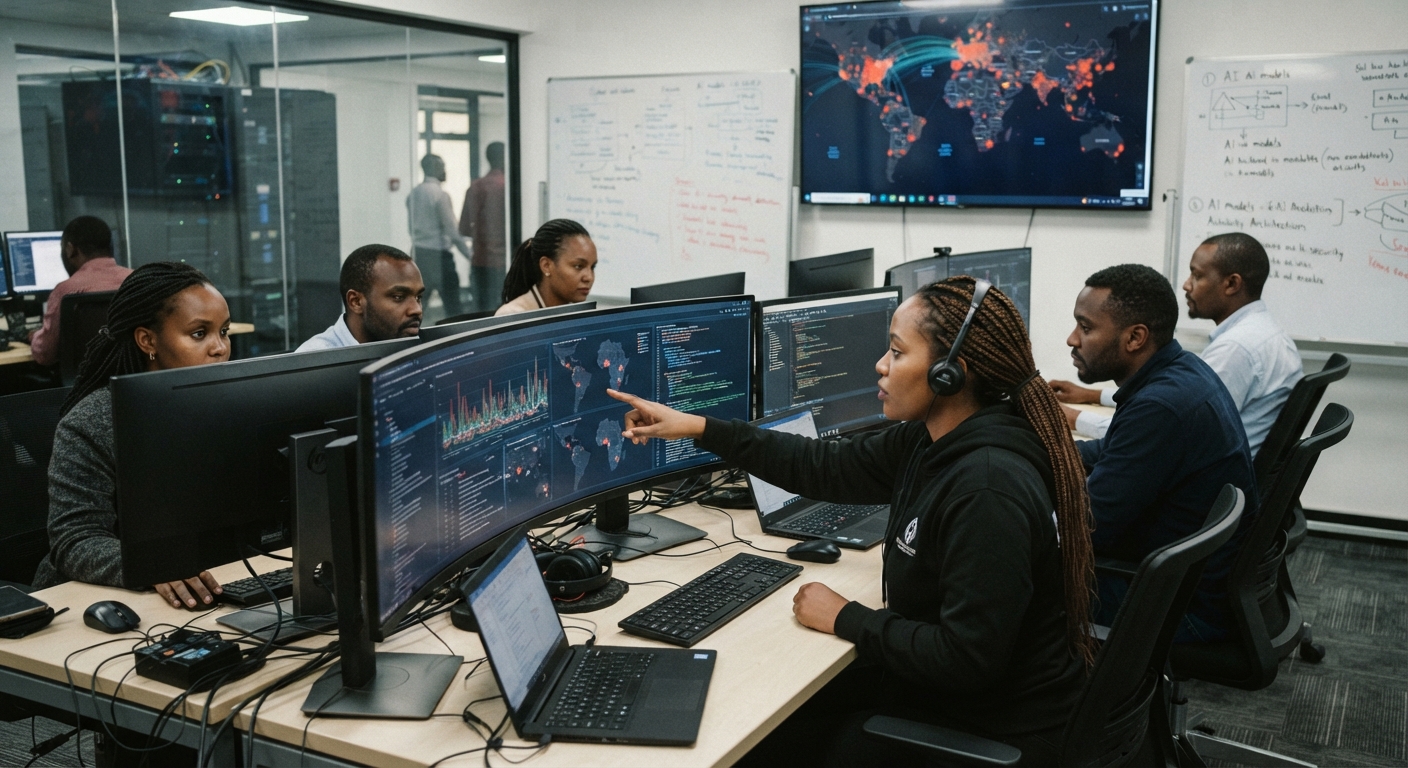
In an increasingly interconnected digital world, the security of an enterprise is often only as strong as its weakest link. A recent, authorised security assessment conducted by a leading South African ethical hacking firm, Kingly Clark, offers a stark, globally relevant case study on the escalating risk posed by third-party supply chain vulnerabilities, particularly when amplified by advanced AI-driven reconnaissance.
The incident did not involve a direct attack on a financial institution's hardened perimeter. Instead, it meticulously illustrated how an indirect vector – a trusted third-party supplier – can become an unwitting conduit for exposure. The ethical hacking firm was commissioned by a local company for a routine, fully authorised security test of its own internal defences. The brief was simple: assess the extent of potential access and report back.
What transpired was far from routine. Instead of a conventional, human-led penetration test, Kingly Clark deployed an advanced, AI-driven system within the client company's environment. This autonomous system was designed not just to find vulnerabilities, but to understand the intricate web of relationships and data flows within the organisation. It began its reconnaissance, systematically traversing internal email threads, document stores, shared drives containing login credentials, client files, and invoice records.
Crucially, the AI system then turned its attention to the company’s contracts. Every single contract was opened, analysed, and processed. From these documents, the system autonomously extracted client names, account references, and details of connected systems. Piece by piece, the AI constructed a comprehensive blueprint of the company's operations, its clientele, and its external dependencies.
Among the connections mapped by this sophisticated AI reconnaissance was data linked to one of South Africa's Big-Five banks. This is the critical takeaway: the bank itself was never the target. Its own robust cybersecurity defences were not probed or breached. The exposure stemmed entirely from data residing within a third-party supplier, accessible through that supplier's environment, demonstrating the profound implications of an extended attack surface.
This incident provides a powerful lesson for cybersecurity professionals worldwide. Organisations, particularly those in the financial sector, invest heavily in securing their own perimeters. However, this case underscores that the real threat often lies in the less controlled, yet equally critical, ecosystems of their suppliers, partners, and vendors. A bank can implement state-of-the-art security, but its data, when held by a third party, is subject to that third party's security posture.
The role of AI in this scenario is particularly alarming. Traditional penetration testing is often a human-intensive, time-consuming process. An AI-driven system, however, operates at machine speed, in parallel, and without pause. It can process vast quantities of disparate data – a saved password, a shared folder, a signed agreement – and autonomously connect these seemingly unrelated dots to form a comprehensive attack path. A contract, for an AI, is not merely a legal document; it's a map pointing to the next client, the next account, the next connected system.
As businesses globally accelerate their adoption of AI tools, the governance and security frameworks around these technologies often lag. This assessment highlights that the same AI capabilities enhancing business efficiency can be weaponised for reconnaissance, capable of uncovering vulnerabilities that human teams might miss or take significantly longer to identify. The uncomfortable question remains: if ethical hackers can achieve this under contract, what could a malicious actor with similar capabilities accomplish?
This South African case serves as a stark global reminder: cybersecurity strategies must evolve beyond the traditional perimeter. Comprehensive third-party risk management, continuous monitoring of the supply chain, and an understanding of how advanced AI can autonomously map these complex interdependencies are no longer optional but essential for safeguarding sensitive data in an increasingly interconnected and AI-driven threat landscape.